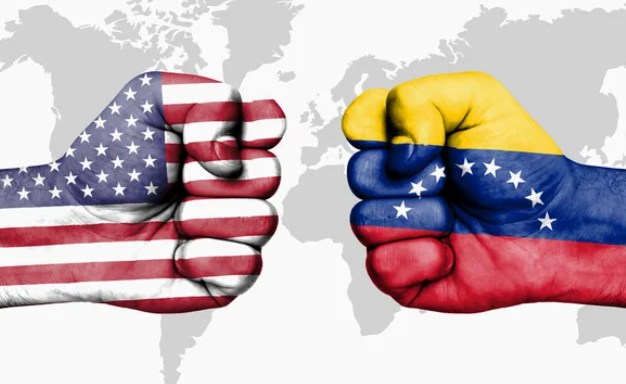
When Two Nations Collide: The Human Story Behind the Venezuela vs USA Conflict
This isn’t just a story about governments fighting over oil or waving flags. It’s about real people, fear, power grabs, and how the ambitions of two countries can send shockwaves through ordinary lives. Sure, the tension between Venezuela and the U.S. has been building for decades, but right now, it feels raw and immediate—like you’re watching history happen, not reading about it in a textbook.
From Oil Boom to Economic Collapse : Venezuela vs USA
Once, Venezuela was the pride of Latin America. Back in the mid-1900s, oil money flowed, cities grew, and the U.S. snapped up most of that black gold. Then politics took a sharp turn. Hugo Chávez stormed in, and later Nicolás Maduro, both waving the flag of socialism, pushing for independence from U.S. influence, and building everything around “Bolivarian” ideals. But things fell apart. Corruption sank its teeth in, leaders made bad calls, oil prices crashed, and suddenly, the country was in freefall. Inflation exploded. Shelves emptied out. Millions packed up and left—some just crossed the border, but plenty made their way all the way to the U.S., looking for a shot at something better.
That’s where the real clash began. In D.C., Venezuela turned into a cautionary tale—a place run into the ground by bad leaders and, to many in power, a hub for drug smugglers heading north. In Caracas, the U.S. became the face of arrogance, always poking around in other people’s business. And caught in the middle? Regular Venezuelans, just trying to get by.
When Rhetoric Turned to Action
By 2025, things finally snapped. The Trump administration started tossing around the word “narco-terrorist” for Venezuelan President Nicolás Maduro and didn’t waste any time ramping things up. Out of nowhere, the U.S. kicked off “Operation Southern Spear.” Warships steamed toward the Caribbean. U.S. jets bombed boats they said were running drugs. Then came the blockade—Venezuela’s oil exports suddenly choked off. The White House insisted this was all about crushing drug smuggling and shutting down the criminal networks around Maduro.
Oil was the real prize. It’s Venezuela’s cash cow, and now it was right in the crosshairs. U.S. forces grabbed several Venezuelan oil tankers in the Caribbean, bold as you please. Caracas exploded, calling it “piracy” and a flat-out insult to international law. Meanwhile, Washington dropped heavy sanctions on Venezuelan officials, cutting off the money and isolating the country even more.
This wasn’t just politicians barking at each other anymore. Real fights broke out on the water, and the diplomatic brawling got ugly.
A Turning Point: Maduro’s Capture
Then, in early January 2026, everything flipped. U.S. forces rolled into Caracas and snatched Nicolás Maduro, along with his wife. The world just stared—nobody expected one of the biggest standoffs in the Western Hemisphere in decades to go down like this. The U.S. flew Maduro out to face drug trafficking charges.
Shockwaves didn’t take long
In Cuba, where military advisors and security teams had backed Maduro for years, people poured into the streets, furious with the U.S., especially after some Cuban officers died in the operation. Back in Venezuela, people didn’t know what to feel. Fear, hope, uncertainty—all of it mixed together. Some saw a shot at real change, maybe even a way out. Others felt like the U.S. had just stomped all over their country’s sovereignty and was about to drag Venezuela into even darker chaos.
International Reactions and a Fractured World
This crisis isn’t just about Venezuela and the U.S.—countries everywhere have taken sides. Brazil’s president called out the military strikes, saying they trample on national sovereignty. China didn’t hold back either, slamming the use of force and pitching itself as a friendlier partner for countries that don’t trust U.S. intervention. Tensions are running high across the region. Cuba and its allies are demanding respect and real conversation, flat-out rejecting what they call “neo-imperialist aggression.”
Inside Venezuela, life feels dangerous and uncertain. Paramilitary groups and militias are out searching for Americans and Westerners, and now the U.S. State Department is telling its citizens to get out while they can. Violence and chaos are part of the daily grind—people wake up to it every day. Economic insecurity just adds to the mess.
What This Means for the Future
Forget the idea of heroes and villains. This isn’t some simple, black-and-white story. It’s a mess of clashing ideologies, money, big-power moves, and, at the core, real people paying the price for all of it. No one really knows where this will lead—maybe toward peace, maybe more division, maybe a totally new diplomatic era. But here’s what stands out: ordinary Venezuelans—farmers, workers, students, families—are carrying the heaviest burden. They’re stuck in a fight that’s way bigger than any of them. Looking back one day, people might see this as a turning point—not just for Venezuela, but for the whole way powerful countries treat those caught in the middle.
Impact on India
Most people in India probably don’t give much thought to the whole Venezuela–U.S. standoff. Seems far off, right? But the impact lands right here at home. When Venezuela cuts off oil, prices around the world shoot up. India, which depends on foreign fuel, feels it fast. Suddenly, filling your tank stings a bit more. Transport costs rise. Daily expenses creep up. People living paycheck to paycheck notice it first. Refineries in India that used to rely on cheap Venezuelan oil scramble for new suppliers, and those deals usually aren’t as sweet. But this goes beyond just money. Every time something like this happens, it’s a wake-up call. Global supply chains aren’t as solid as they look, and for India, playing it smart out there—keeping options open instead of picking sides—makes life a lot smoother for everyone back home.
Pingback: Real Madrid Vs Levante
**aqua sculpt**
aquasculpt is a premium metabolism-support supplement thoughtfully developed to help promote efficient fat utilization and steadier daily energy.
**men balance pro**
MEN Balance Pro is a high-quality dietary supplement developed with research-informed support to help men maintain healthy prostate function.
Roobetlogin is pretty slick. I’ve had some decent luck logging in and playing. Solid site! roobetlogin