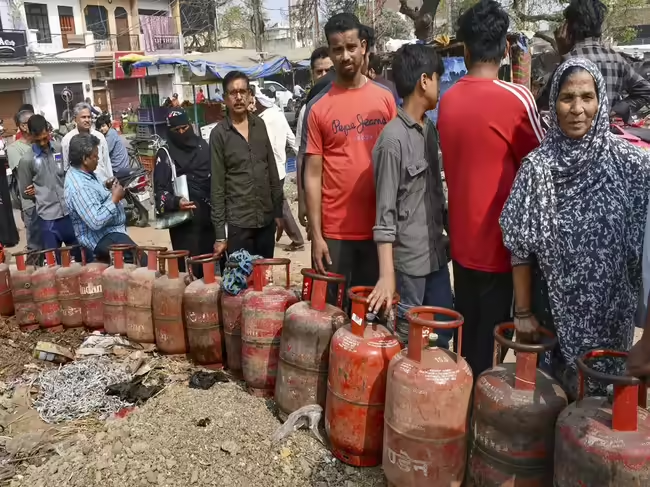
India LPG Cylinder Shortage 2026: What You Need to Know
Rain tapped on the window, soft and steady, keeping time with the hush inside. Out there, everything looked washed out and gray, but in here, the fireplace glowed and made the whole place feel safe. I sank into my favorite chair, book in hand, flipping through the pages at my own pace, letting the story pull me in. Time seemed to slow down, almost like the rain built a quiet world just for me. Right then, all that counted was the comfort of the words and how calm the day felt.
How the US-Israel-Iran War Is Behind India’s LPG Crisis
On February 28, 2026, the United States and Israel hit Iran with coordinated strikes. Iran didn’t waste any time fighting back — they moved to block the Strait of Hormuz, which, let’s be honest, is one of the world’s most important energy routes. India felt the shock right away, and it hit hard. In 2025, India brought in almost 21 million tonnes of LPG through that strait. That’s about 62% of all the LPG the country imports. When Iran started warning they’d burn any ship trying to pass, cargo vessels just stopped moving. Hundreds of them got stuck, and suddenly, India’s LPG supply chain froze. The country only has enough LPG in reserve for about ten days — and for a place with 1.4 billion people, that’s cutting it way too close.
LPG Cylinder Prices in India Today: City-Wise Breakdown
The supply crunch has pushed LPG prices up fast. Indian Oil just raised the price of a 14.2 kg domestic cylinder by Rs 60, starting March 7. That’s the first price jump since April 2025. Commercial 19 kg cylinders went up even more—by Rs 115, which is the biggest single increase ever for that type.
New Delhi: Rs 913 | Mumbai: Rs 912.50 | Bengaluru: Rs 915.50 | Chennai: Rs 928.50 | Hyderabad: Rs 965 | Kolkata: Rs 939 | Jaipur: Rs 916 | Patna: Rs 1,002.50
Hotels, Restaurants and Households Bearing the Brunt
The human cost of this crisis is hitting hard, right now. The National Restaurant Association of India says up to 60% of restaurants could shut their doors in just a few days if commercial LPG doesn’t come back. About 85% of restaurants across the country depend on this fuel to cook. In Mumbai, the Hotel Owners Association says around 8,000 hotels are feeling the impact—20% have already closed. But it’s not just restaurants. Over in Bengaluru, distributors have stopped commercial deliveries because oil companies aren’t refilling cylinders. Some dealers are even hanging signs outside, warning people they’ll have to wait 25 days just to get a domestic refill. Even lawyers at the Delhi High Court are feeling the squeeze.
Government Response: Essential Commodities Act, Price Controls and Production Push
The Indian government jumped into action to tackle the crisis. Prime Minister Narendra Modi called an urgent meeting with Petroleum Minister Hardeep Singh Puri and External Affairs Minister S. Jaishankar to get a handle on things. Modi was clear: the war can’t disrupt everyday life for regular people.
To keep things under control, the government brought in the Essential Commodities Act of 1955. That lets them manage how petroleum products are supplied and distributed, and crack down on hoarding and black market deals. The Petroleum Ministry also bumped up the minimum gap for booking domestic LPG cylinders from 21 to 25 days. They’re hoping that spreads things out and stops people from panic buying. Oil refineries got the word to ramp up LPG production as much as possible. On top of that, Reliance Industries is boosting output at its Jamnagar complex, which happens to be the biggest integrated refinery in the world.
What Should Consumers Do During the LPG Shortage?
Government officials say India has enough reserves to cover domestic needs. The recent local shortages? Mostly a mix of panic buying and some hiccups in distribution. Still, it makes sense for households to use gas carefully, skip early bookings unless you really need them, and don’t bother hoarding. Induction stoves are suddenly flying off the shelves—stocks for companies like TTK Prestige and Stove Kraft have shot up 15% in the market.
For businesses, the message is clear: anyone caught trading on the black market faces tough penalties. Central authorities are keeping a close eye on things, and they expect the supply to settle back to normal once the global situation cools down or new import routes open up.