Iran Attacks UAE: What Really Happened and What It Means for the Middle East
The Middle East has weathered its share of turmoil, but what kicked off on February 28, 2026, was on a whole different level. Iran unleashed a huge barrage of ballistic missiles, drones, and cruise missiles. Suddenly, the UAE—usually known for its calm and wealth—was stuck right in the middle of the chaos. The Iran Attacks UAE are a significant escalation in regional tensions. So, let’s make sense of all this. We’ll look at what actually happened, why it happened, how the UAE reacted, and, honestly, what it says about the future.
Why Did the Iran Attacks UAE ?
This whole mess didn’t kick off with Iran and the UAE. The real spark came when the U.S. and Israel teamed up for airstrikes against Iran on February 28, 2026, taking out Iran’s Supreme Leader Ali Khamenei and some top military brass. They also went after Iran’s infrastructure and air defenses. Iran didn’t just sit there. It fired back fast and furious. By March 13, Iran had launched 285 ballistic missiles, over 1,500 drone attacks, and 15 cruise missiles at the UAE alone. And it wasn’t just the UAE getting pummeled. Iran targeted spots all across the Gulf—Bahrain, Kuwait, Qatar, Saudi Arabia, and Israel. Big places like Manama, Kuwait International Airport, Abu Dhabi, and Riyadh were all hit.
The Iran Attacks UAE were not just isolated events; they marked the beginning of a broader conflict that would reshape the dynamics of the region.
What Got Hit? Dubai, Abu Dhabi, and Beyond
As the situation unfolded, the implications of the Iran Attacks UAE became evident, affecting trade and security across the Gulf.
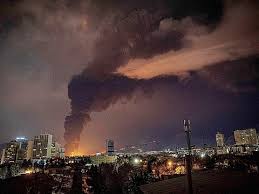
The attacks hit hard, but honestly, the UAE kept up an impressive defense. Officials say they stopped more than 90% of incoming missiles and drones from Iran. By March 12—just thirteen days into the war—air defenses had taken out 268 ballistic missiles, 15 cruise missiles, and a jaw-dropping 1,514 drones. Six people lost their lives and 131 were injured. Even with all those interceptions, things weren’t flawless. Debris from destroyed missiles still caused chaos and real injuries. One Shahed-type drone crashed near the Fairmont The Palm Hotel on Palm Jumeirah, setting off a big explosion and fire, shattering windows and injuring four. Dubai International Airport took a hit from a suspected air strike, which left four staff members hurt and triggered an evacuation. An AWS data center caught fire after a strike, which shut down power and messed up cloud services. Over at Abu Dhabi National Oil Company’s massive Ruwais refinery, a drone strike set off a fire, and the facility was shut down just to be safe. All six civilians killed were foreign nationals from Pakistan, Nepal, and Bangladesh. None died from the missile strikes directly—the debris and shrapnel from intercepted missiles were what caused their deaths. Moreover, the Iran Attacks UAE prompted discussions among Gulf nations on how to respond effectively to such aggressive actions. In conclusion, the Iran Attacks UAE highlight the fragility of peace in the region and the urgent need for diplomatic solutions.
How the UAE Defended Itself — and Held Its Ground
Even with all the chaos, people couldn’t help but notice how well the UAE handled itself. You get the sense they’d been ready for something like this for years. As Abdulkhaleq Abdulla, a political scientist from the UAE, put it, the real story was how the country kept defending itself against daily missile and drone strikes—now deep into the third week. It’s almost like that level of preparation was baked in all along. Politically, the UAE didn’t hold back. They recalled their ambassador to Israel, sending a clear message that Gulf leaders were frustrated with how things spiraled out of control. The message was blunt: nobody in the Gulf ever wanted this war. Before the attacks even started, Oman was trying to play peacemaker, running indirect talks between Washington and Tehran. Their foreign minister said peace was pretty much within reach after Iran agreed not to stockpile enriched uranium. But then, just hours later, the US and Israel fired missiles, and everything changed.
What Happens Next?
By mid-March 2026, the conflict hasn’t let up. Iran’s attacks and threats have almost stopped shipping through the Strait of Hormuz, which sent oil prices shooting up by 40% and shook the global economy. The UAE is stuck in a tough spot. It’s trapped between a war it never wanted, Iran—the country it tried to calm—and the US, whose military bases sit on its land. Right now, Gulf states face what some analysts call an impossible dilemma: strike back, and they’re seen as siding with Israel; stay out of it, and watch their own cities suffer. Honestly, nothing about the Middle East feels familiar anymore. The UAE, once the region’s champion of stability, openness, and business, is under pressure like it’s never seen before.