
The India AI Impact Summit 2026 ran from February 16 to 20 in New Delhi, and honestly, it turned into one of the biggest AI events out there. Bharat Mandapam set the stage for five packed days. You had heads of state, tech CEOs, startup founders, researchers, and policymakers all under one roof, swapping ideas and working out what responsible, inclusive AI should look like in the years ahead.
Billed as the first big AI summit in the Global South, this event set out to change the conversation—not just focusing on AI safety, but on how AI can drive real development. The theme? People, Planet, and Progress. The summit packed in more than 500 sessions and over 840 exhibitors, all underscoring India’s drive to stand out as a major force in the world of AI.
Also read this : Australia Vs Sri Lanka: A Rivalry Built On Skill, Spirit, And Surprises – Blog4Vision
AI Impact Summit 2026 : Day-by-Day Highlights
Day 1 (February 16): Grand Opening and Startup Showcase
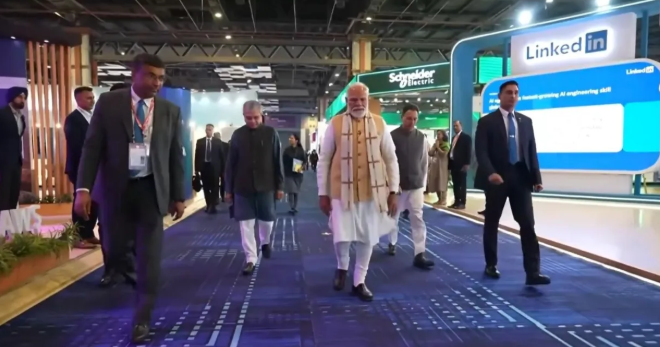
Prime Minister Narendra Modi kicked off the India AI Impact Expo, walking through the pavilions, chatting with innovators, and checking out displays from over 600 startups and 13 different countries. Right from the start, the buzz was all about India’s growing strength in AI and the country’s drive to build its own tech. People flocked to see autonomous delivery robots, AI tools that work in multiple languages, and smart solutions built for specific industries. These grabbed the spotlight.
Day 2 (February 17): Policy Push and Global Participation
Leaders, ministers, and top tech execs all showed up at the summit, putting a spotlight on India as a serious player in AI. Officials kept coming back to the same point: Yes, AI brings a ton of good, but the risks—deepfakes, fake news, all that—are real. They didn’t just talk; India’s already in talks with over 30 countries, trying to figure out both technical and legal ways to keep AI from getting out of hand.
Day 3 (February 18–19): Strategic Vision and Industry Signals
India’s charging ahead with new tech, and leaders aren’t shy about it. The government pointed out that startups now have access to more than 38,000 high-end GPUs at lower prices, trying to make sure nobody gets left behind just because computing power costs too much. Big names like Sundar Pichai, Sam Altman, and Dario Amodei jumped into the conversation too. They talked about how the workforce is changing, what kind of infrastructure everyone needs, and how AI is shaking up the economy.
Day 4 (February 19): Inclusive AI Takes Centre Stage
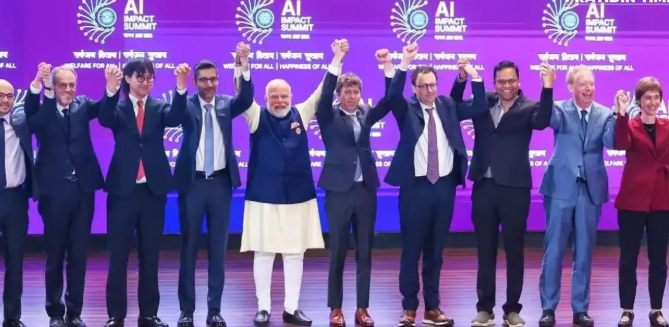
During the Leaders’ Plenary, PM Modi pushed for AI that actually puts people first and stays open to everyone. He rolled out the MANAV Vision framework—it’s all about ethics, accountability, sovereignty, accessibility, and making sure AI systems are legitimate. Other global leaders, like Emmanuel Macron, jumped in too. They urged everyone to work together on AI rules and sounded the alarm about the risks of a digitally divided world.
Day 5 (Closing Phase): Investments and Global Confidence
Union Minister Ashwini Vaishnaw said the summit landed over $250 billion in infrastructure investment commitments—a clear sign that the world trusts India’s vision for AI.
Also Read This : UGC Bill 2026: विवाद, विरोध और सुप्रीम कोर्ट की रोक – Blog4Vision
Why AI Impact Summit 2026 Matters
The India AI Impact Summit 2026 wasn’t just another tech meet-up. It made a statement—loud and clear—about where India stands in the world, both politically and economically. More than 35,000 delegates showed up, flying in from over a hundred countries. Big-name tech companies joined the crowd too. The message? India’s not just talking about AI; it’s helping shape the rules and build the backbone for what comes next.
Key takeaways shaping the global AI narrative :
- AI for the Global South isn’t just talk—India’s stepping in as the go-between for big economies and emerging markets.
- When it comes to computing power, India’s aiming high. Plans are in motion to ramp up GPU numbers past 100,000. That’s a serious leap for AI capacity.
- On the tech front, India’s not waiting around. Building 12 homegrown foundation models and rolling out multilingual platforms shows a real push for tech independence.
And let’s talk about impact. Programs like AI for All, AI by HER, and YUVAi aren’t just slogans—they’re about bringing more people, especially young people, into the AI fold and making the whole thing more inclusive.
Some people complained the summit focused too much on showing off market potential, but honestly, it made India’s spot in the next wave of AI impossible to ignore.
Here’s what matters: the AI Impact Summit 2026 didn’t just put India on the global AI map. It showed the world that India’s ready to lead — building tech, setting the rules, and making sure AI grows in a way that works for everyone.
Conclusion
The India AI Impact Summit 2026 really put India on the map as a major player in the world of artificial intelligence. You saw it everywhere—from the big-picture MANAV Vision to the huge investments driving the IndiaAI Mission. India didn’t just talk a good game; they showed they mean business. But what actually stood out? The summit made it clear that India wants AI to work for everyone, especially the Global South, not just for a select group with all the resources. International interest was high, and there were real promises about building out the tech and infrastructure. The tricky part comes next: turning all those bold announcements into action. Can India deliver new jobs, build trust, and make sure AI works for people across the board? That’s where the real story starts.
Если вы сейчас разбираетесь с SEO, можно почитать SEO-блог с кейсами продвижения — там собраны гайдов по оптимизации контента и структуре.
Узнайте больше о песок цена за куб — оптимальный выбор для ваших строительных проектов!
Песок с доставкой — это удобный способ обеспечить строительный или ландшафтный проект без необходимости самостоятельно его перевозить. Многие клиенты выбирают эту услугу, чтобы сэкономить силы и ресурсы.
Соблюдение графика — приоритет для компаний, предоставляющих такую услугу. Также доступны дополнительные услуги, такие как укладка и просеивание песка.
Обеспечьте себе комфорт, заказав песок с доставкой заранее. Перед оформлением заказа рекомендуется уточнить все детали у менеджера.
Такая услуга значительно ускоряет процесс строительства или благоустройства. Выбор компании с хорошей репутацией гарантирует своевременность и качество услуги.
В современном мире дистанционное подготовка детской аудитории становится всё более и более распространённым.
Страница- https://grace-calipso.ru/
«Динамо-Минск» на практике опровергает мифы о хоккее: интернациональный состав, аншлаги на трибунах и сильная школа показывают, что клуб из Беларуси способен конкурировать на уровне КХЛ. Подробнее здесь: https://cont.ws/@sirgreensz/3129433
https://amzn.asia/d/0iLm7rge
Планирую поездку в Таиланд и планирую уточнить некоторые моментов по метеоусловиям и аренде транспорта. Например, на 2025 год как ситуация складывается с арендой байков на Пхукете, сколько оценивается аренда байка на Пхукете и есть ли расхождение в цене по сравнению с данным годом? К тому же было бы интересно знать последние отзывы об Андаманде на Пхукете и сведения по погоде в популярных местах как Хуахин и Патонг. Между прочим, кто-то поделился опытом, как все организовано с рынками на Патонге и пляжами Самуи на карте?
Не могу не сказать про цунами в Тайланде 2004 года — познавательно, насколько защищено сейчас и какие меры ввели после той драмы. К тому же нужно рассмотреть разницу во времени между Москвой и Бангкоком, чтобы верно спланировать день. Если кто-то может сказать, сколько средств брать с собой в Таиланд на 10 дней и где лучше арендовать мопед или байк на местах, размещаю ссылку с полезной инфой тайланд . Был бы признателен за мнения и личные рекомендации!
Когда планируете тур по самым прекрасным городам Чехии, без сомнения предоставьте время Праге — это отличный путеводитель по праге с большим количеством достопримечательностей, которые необходимо увидеть. За 1 день в Праге удастся успеть посетить Староместскую площадь, Петршинскую башню и включая самую узкую улицу в Праге. Не игнорируйте заглянуть в Седлецкий монастырь и замок Гоуска, они в особенности характеризуются своим старинным колоритом.
Почитатели чешского пива непременно оценят разнообразие марок чешского пива, таких как Козловна Прага или Влтавин, а также известные чешские сорта пива. Если планируете узнать, какое превосходное чешское пиво попробовать и где разыскать хорошее чешское пиво, рекомендуется посмотреть важные советы и компактное руководство по чешскому напиткам и пиву на сайте чешские сорта пива . Для путешествий на машине есть отличный лайфхак — тур почти даром: как взять в аренду машину за 1 евро, что превращает поездку еще бюджетнее.
Если вы собираетесь поездку в Берлин, имеет смысл обратить внимание на объекты, такие как берлинская стена и замки Берлина — скажем, берлинский дворец и другие замки в vicinity Берлина, которые превосходно подойдут для single-day экскурсий. Для тех, кто любит историей, поездка в Потсдам из Берлина — это прекрасный вариант, и заметьте, добраться туда можно весьма удобно: берлин-потсдам как добраться — в деталях расписано тут познань берлин расстояние .
Помимо этого, для приезжих из Польши и Украины важна информация о удалении и способах путешествия: например, познань-берлин расстояние, лодзь-берлин поезд или днепр-берлин поезд, а также ужгород-берлин поезд. Если прилетаете в аэропорт Берлин-Бранденбург, имеет смысл заранее уточнить, как добраться из аэропорта Берлина до автовокзала Берлина или других зон города — это сохранит много минут и сил на месте.
Когда намереваетесь приехать в Потсдам и ищете, что осмотреть за одни сутки, определенно включите в маршрут Сан-Суси, Голландский район и резиденцию Глиникке. Для энтузиастов окружающей среды и туров превосходно подходит японский парк в Дюссельдорфе и водопады Лихтенхайна – данные места замечательно представляют изящество парков Германии. Вдобавок не забудьте про блошиный базар Дюссельдорфа, где есть шанс найти занимательные вещи, место и часы работы которого элементарно разузнать на посвященных ресурсах блошиный рынок дюссельдорф адрес . Путешественникам, кто хочет объединить культурные мероприятия с отдыхом, советуются поездки на производства Германии и посещение Фантазия Ленда, где проездные удастся заблаговременно взять онлайн, для предотвратить очередей. Ежели волнует забота о экологии и поддержка среды обитания в Германии, стоит обратить внимание на соответствующие выставки и карты культуры, имеющиеся в основных городов. Не оставьте без внимания про подобные символы Германии, как замок Берлина и форт Кёнигштайн, которые прекрасно расширят любой возможный программу поездки.
good
very good
Comprehending your skin tone is key to finding the best colors that complement your natural complexion. For those with a porcelain olive skin color palette or fair olive skin tone, knowing whether your olive green undertones are warm or cool can make a significant difference when choosing clothing or makeup. One widely-used method is the vein color analysis or vein test, which helps figure out if you have red undertones, yellow undertones, or a neutral undertone, steering you towards the right colour seasons like soft autumn, deep summer, or cool winter palettes.
If you’re unclear about what season you belong to, there are multiple free colour analysis apps and quizzes accessible that use AI technology to analyze your skin complexion and advise the best color season for your skin tone. These tools often incorporate features like virtual hair color try on and color analysis test photo uploads, making it simpler to experiment with different shades like muted summer or light spring palette before committing. For a helpful start, you can check out this guide fair skin tone that covers everything from skin tone color charts to season color analysis tips.
новые крипто игры Крипта, майнинг, аирдропы и тапалки — всё самое свежее в Smart Money Crypto Зарабатывай на криптоиграх и фармилках прямо в Telegram. Пассивный доход с удовольствием и без вложений! Заходи и забирай свою прибыль. ИЛИ Ищешь где заработать на крипте? Smart Money Crypto Новости, криптоигры с выводом, актуальные аирдропы и майнинг на телефоне. Тапалки и фармилки в Telegram для твоего пассивного дохода. Присоединяйся к команде Smart Money!
купить метр провода купить электрику в минске
Looking for a yacht? premium yacht experiences in Cyprus for unforgettable sea adventures. Charter luxury yachts, catamarans, or motorboats with or without crew. Explore crystal-clear waters, secluded bays, and iconic coastal locations in first-class comfort onboard.
купить гостиничные сейфы
I have recently been examining the intense summer color palette and how it works with different skin tones, especially fair skin with yellow undertones. Using tools like color analysis pro and complimentary online color analysis quizzes can truly help identify what season I am and which clothing colors work with my skin best—this was a game changer when I discovered soft summer and dark summer color palettes offer different vibes for my skin type. If you’re hesitant about your undertone, the vein test undertone and skin tone chart can be very helpful in pinpointing whether you have olive skin, amber skin tone, or more of a neutral skin tone.
For anyone seeking to dig deeper into seasonal color analysis, I’d advocate checking out sources that include a skin shade chart and analysis of what colors look best on pale skin or yellow undertone skin. Recognizing your skin color palette, whether it’s closer to deep autumn colour palette or light spring color palette, can make opting for clothes and hair color try on considerably easier and more engaging. For a comprehensive overview and some handy tools, here’s a fantastic site with data on color-analysis pro and more seasonal colour analysis .
Если вы хотите организовать поездку в Париж, советуем посетить на блошиные рынки Парижа — там можно встретить уникальные вещи и очарование старого города. Для поклонников искусства бесплатные музеи Парижа станут настоящей находкой, а в Лувре рекомендуется обратить взгляд самым прославленным экспонатам, включая легендарную «Мона Лизу». В центре информации также важна карта безопасных районов Парижа и инструкции по чаевым, например, сколько чаевых вручать во Франции и как грамотно поступить в кафе и ресторанах.
Для тех, кто интересуется темой историей и культурой, выделяются такие места, как дворец Трокадеро, музей Массена в Ницце и руанский собор. Если хотите доехать до Версаля из Парижа, подробные инструкции найдете на сайте округа парижа . Советуем посетить и замки Луары, а также получить информацию о таких знаменитых личностях, как Коко Шанель. Защищённость в 15 округе и других округах Парижа — значимый вопрос при планировании прогулок, особенно если вы стремитесь проникнуться с особенной атмосферой Тампль и Сен-Дени.
ProDentim is a distinctive oral-care formula that pairs targeted probiotics with plant-based ingredients to encourage strong teeth, comfortable gums, and reliably fresh breath.